Saturday, 6 May 2017

Girl with a Pearl Earring


A very short evening flight took us to Schiphol Airport on the outskirts of Amsterdam.  The queue to pass through customs was very long however, once we had passed through, we were only a quick bus ride away from our hotel, where we pretty much went straight to bed as we wanted to be out early the following morning.
 
The next day we took a pleasant train journey to Den Haag (The Hague), the capital of the Netherlands.  We quickly deposited our bags at the hotel and set out to explore the city.  The Hague is a beautiful town, with many lovely buildings and streets and a canal system around the old city centre.  It was a great introduction to the beauty of the Netherlands.
 
The main reason for our trip to The Hague was to visit the Mauritshuis the museum that exhibits many paintings by Dutch masters.  Primarily I wanted to see the Girl with a Pearl Earring by Johannes Vermeer.  This painting, despite being smaller than I had anticipated, was alone worth our trip to the Netherlands.  The restored masterpiece is mesmerizing, with the girl’s skin having an almost translucent glow.  Photographs and prints simply do not do the painting justice and Michael and I returned to the artwork again before leaving the gallery, such was the painting’s allure.  The museum housed many other beautiful artworks, most notably a wonderful painting by Rubens, Old Woman and Boy with Candles.
 
Michael and I spent the rest of the afternoon at the Escher Museum, which is housed in the former Winter Palace of the Queen Mother Emma of the Netherlands.  There were many works by Escher, the most spectacular being a 7 metre long Metamorphosis – an enormous woodcut.  The top floor of the museum features optical illusions, which tricked the eyes at every turn.  One feature of the museum, which fascinated me, was the collection of 15 enormous chandeliers scattered throughout the building.  They were made by the artist Hans van Bentem, and featured objects like spiders, seahorses and an enormous skull.  They were very impressive.


Tiptoe Through the Tulips 
 
I was sorry to say goodbye to The Hague and would definitely like to return for a longer stay, however we needed to move on to our next destination.  A very short train journey took us to Leiden, where once again we quickly deposited our bags and caught a bus to Keukenhof, the most beautiful spring garden in the world.  We were lucky enough to be in the Netherlands at tulip time and Keukenhof, an area of 32 hectares, holds over 7 million tulips, daffodils and hyacinths.  There are also pavilions showcasing orchids, roses and lilies.  


 We thought that we might spend a couple of hours there however, once we saw the magnificent displays, we ended up spending the entire day.  I could go on forever about the endless varieties, colours and different sized tulips that were displayed, but to be honest, there are not enough adjectives to adequately describe their beauty.  Michael has displayed a selection of our photos at the end of this blog for those interested in seeing a small example of their endless variety.  We thoroughly enjoyed ourselves and I would love to return and take one of the whisper boat trips through the bulb fields, which surround the Keukenhof.
 
We returned to Leiden and were surprised to discover a beautiful mediaeval city stretching our behind our hotel, very different from the city which is visible from the train station.  There are lovely canals, streets lined with centuries-old buildings, windmills and gardens.  It is also the birthplace of Rembrandt.  It is a lovely city to walk around and I found myself envying the people who lived in such a beautiful place.  There was also a fabulous street market, selling fresh produce and just about anything else you could possibly want.
 
We took a day trip to Delft, yet another lovely town.  The city is probably most famous around the world for manufacturing Delftware, hand-painted blue and white pottery.  I have never particularly liked this pottery however it was interesting seeing all the different wares, including the tiles.  Michael and I visited the Oude Kerk (Old Church), with its famous leaning brick tower.  The church dates back to 1246 and is a grand, if strangely plain church.  Johannes Vermeer is buried there.
 
We also visited the Nieuwe Kerk (New Church).  This church dates back to the 14th century and is the burial place of members of the House of Orange-Nassau.  It is an imposing looking church, which dominates the Delft Market Square.  Interesting displays have been set up which detail the history of the church and we spent quite a while exploring the building before heading to the Vermeer Centre, a multi-media exhibition which explains the work of Vermeer and his contemporaries.
 
A day trip to Delft really doesn’t do the city justice, and I would love to return and spend a few days exploring this lovely town.

Michael found a great restaurant for our final evening in Leiden.  The restaurant was crowded, with two large groups occupying the bulk of the tables – one group celebrating a birthday, whilst the other celebrated a bachelor party.  The entire restaurant joined in singing the Dutch version of happy birthday – a raucous song, which entailed much banging on the table.  This was followed by the groom-to-be (who was dressed as Fred Flintstone) being nominated by his fellow partygoers, (who were all wearing headbands with bones), to serenade the birthday group.  He then proceeded to sing a very respectable version of Ed Sheeran’s Thinking Out Loud, which was roundly cheered by the restaurant.  It made for a memorable evening and whenever I hear that song I will be reminded of beautiful Leiden.
 

Lost in Amsterdam   
 
Another train journey, this time to Amsterdam, where we stuck to our familiar routine of quickly dropping our bags at the hotel before setting out to explore the city.  It came as a bit of a shock to find ourselves surrounded by crowds of people, as we had become used to a rather more sedate way of life in the previous cities.  The first thing that we noticed was the number of bicycles.  Cyclists were everywhere but truly staggering was the sight of thousands upon thousands of bicycles parked in the bicycle parking lots.  There were even underground cycle parking lots.  I have no idea how people could locate their bike among so many seemingly identical bicycles.
 
Michael and I headed to the Rijksmuseum, the largest museum in the Netherlands.  It seems that a few other people had the same idea, as we had to queue for over an hour to gain entry.  Michael was keen to see the Rembrandt paintings on display, most notably The Night Watch.  I have never been too much of a fan of Rembrandt, as most of his works that I had seen to date, were very dark, gloomy looking paintings.  My opinion has now changed, as the works on display at the Rijksmuseum are particularly lively with interesting subjects.  The Night Watch is huge and there were a number of self-portraits, which were painted as a young man.  There were also some very good paintings by Frans Hals as well as Woman in Blue Reading a Letter by Vermeer.  Unfortunately, The Milkmaid was on loan to the Metropolitan Museum of Art at the time of our visit. 
 
The following day we decided to visit the Van Gogh Museum.  This time, we had to queue for two and half hours in 6 degrees temperature to gain entry.  I would seriously hate to visit Amsterdam in the summertime, as you must just spend the entire time queuing.  Anyway, we finally made it through the doors and were able to see some of his famous works.  I have never been a Van Gogh enthusiast (with the exception of The Starry Night – I like the colours in that one), and unfortunately this museum didn’t really change my opinion.  I have never really understood how he came to be so popular however greater minds than mine have decreed that he is a master so I shall just have to accept it.  Michael thoroughly enjoyed the visit so the wait was worth it.

A change of pace saw us take in the Heineken Experience.  The brewery was established in 1864 and the now defunct brewery showcases the history of the beer.  The museum is interesting and I particularly liked seeing the draught horses in the stable area.  They are still used to drag carts through the streets of Amsterdam to promote the beer and museum.  We were able to taste the beer at the conclusion of our tour.  It was a nice way to spend an afternoon however, I may be biased, but I think that the Guinness tour is better.
 
We had hoped to visit Anne Frank House however Michael was not keen to queue for the estimated 2 hours that it would take to gain entry.  This was despite being told by one of the operators that the queue was the shortest that it had been all week, as people had been waiting more than 4 hours to enter the house.  It is extraordinary that such a young, sad life has touched so many people.
 
The Netherlands is a beautiful country and I would like to return to explore more of The Hague, Leiden and Delft as well as other towns in the countryside.  Neither Michael nor I warmed to Amsterdam, as it seemed to lack the charm of other European cities.      


Wednesday, 5 April 2017

Dublin Sky


It has been a while since I updated our blog with our life in Dublin.  Michael and I lead a quiet existence with lots of walking and we are enjoying the Irish way of life.  The winter has been and gone, and overall it wasn’t that harsh.  We did have a couple of snow flurries however they didn’t amount to much and there were some very windy days but they are behind us now.  Spring has sprung and the cherry blossoms make walking in the parks very pretty.  The daffodils are slowly giving way to the tulips, the days are getting longer and the skies are a crystal clear blue.  There is still a slight chill in the air, but all in all, it is a pleasant time of year.
 
The city itself is a mess at the moment, as a new tramline is being installed in the centre.  Roads and footpaths are being dug up which makes navigating the town a bit of a challenge.  It will be worth the short-term pain, as the new line will benefit a lot of commuters and I am sure it won’t be too long before the city is back to its beautiful self.

Brexit is causing a lot of unease in the Republic, as while they will remain in the EU, Northern Ireland of course will not.  There is a lot of talk about whether or not the hard border will have to be reinstated between Northern Ireland and the Republic and neither state wants to see that happen.  It remains to be seen whether a work around will occur.  To add to the fun, Northern Ireland politics is a bit of a shambles at the moment, and there are rumblings of making a push for a united Ireland.  I personally can’t see that happening any time soon, but it makes for interesting times.

We see occasional visitors from Australia, most recently a couple of ex work colleagues of Michael.  It is always good to catch up with people and it is a good excuse for a night out which invariably ends with whiskey drinking and Irish music.  It is nice to show people “our town”.

Michael and I attended the Craft Beer Festival, which was held at the Convention Centre and is a mere 2 minutes walk from our apartment.  We had a lovely evening with Michael sampling the different beers on offer whilst I tried some different gins.  We were entertained by two different bands, the first of which was so terrible that we couldn’t decide if they were a parody ‘70’s band or if they were really that bad.  Thankfully, the second band was much better and we ended up staying until the very end.
 
The musical, Sunny Afternoon, came to Dublin.  I saw the London production and loved it so much that Michael bought tickets for us.  We had front row seating and we had a lovely afternoon singing along with the cast and finished up dancing in the aisles.  We then headed over to the MV Cill Airne, a former tender ship, which is now a floating restaurant and bar on the River Liffey. The ship has been beautifully restored and we enjoyed a pre-dinner drink before finishing the day with dinner at the Harbourmaster Bar and Restaurant, which, as the name suggests, is a restaurant in a converted brick walled harbourmaster’s office.

We were lucky enough to see Colin Hay (former front man of Men at Work) when he came to Dublin.  Michael purchased tickets to see him at The Academy and we were amazed at the size and diversity of the crowd that was there.   We had expected a small group of middle aged ex pats and were greeted instead by a large crowd of people of all ages, most of them Irish.  Colin was a terrific entertainer, playing for over two and half hours, telling a number of very funny stories in between his songs.  The crowd responded really well, singing along with him and we had a fabulous evening.       


Tuesday, 28 March 2017

Circus Bulgaria


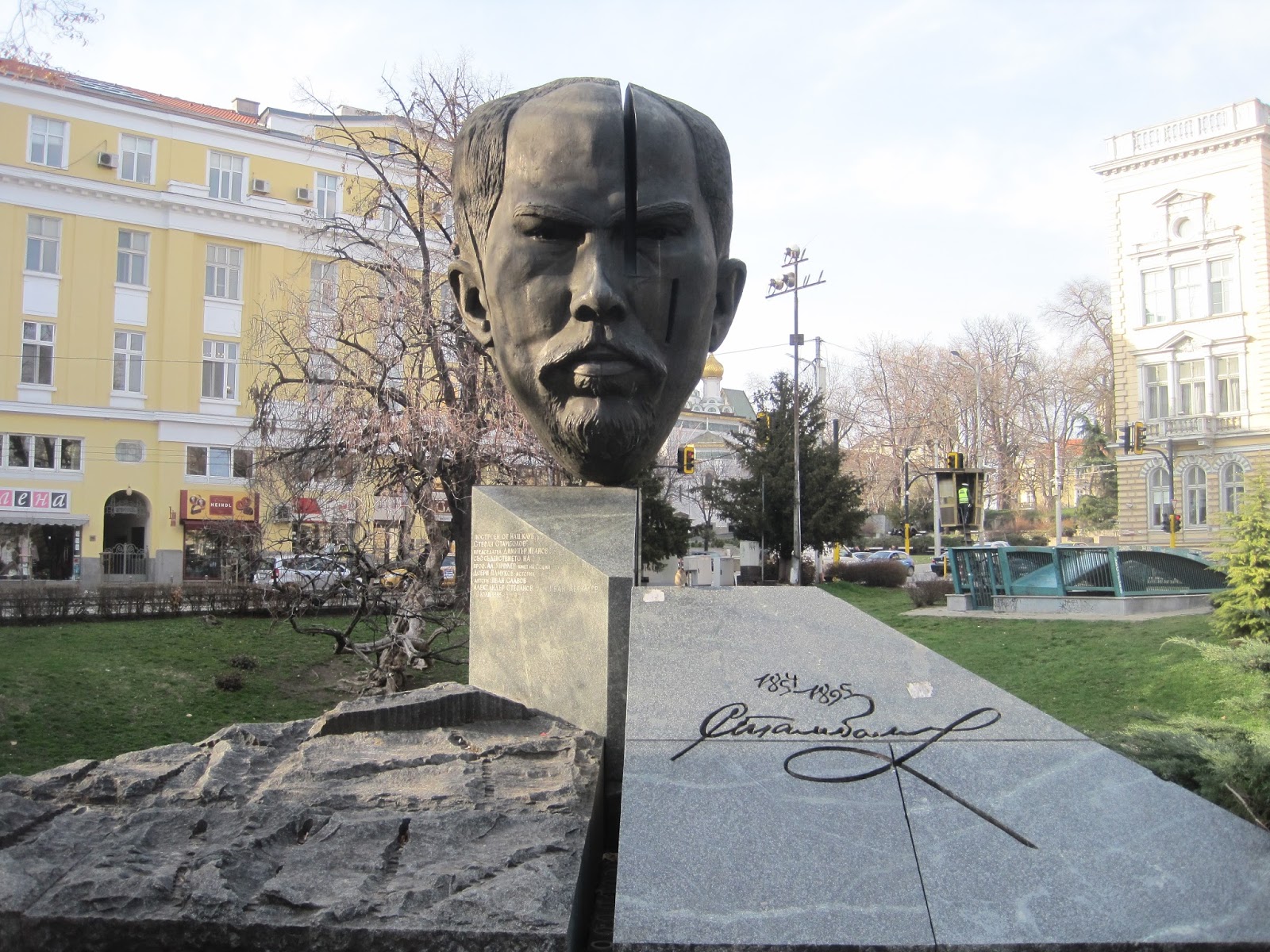
Michael and I took a pleasant, early morning, three and half hour flight to Sofia.  A half hour train journey on the brand new metro rail service and a short walk took us to the Premier City Hotel where we checked in for our stay.  We then headed out to familiarise ourselves with the city.
 
Sofia is a strange mixture of various architectural styles, including Roman ruins, crumbling Art Nouveau and Art Deco buildings and huge edifices from the communist era.  The main boulevards are very wide however the streets seem very quiet with little traffic or people.  We had a good walk around before the early morning start got the better of me and I retired to our hotel, leaving Michael to dine on kebabs at a nearby restaurant.
 
The following morning we took a walking tour of the city, which took in various points of interest.  Our guide was very informative and explained the historical significance of the sites and buildings in Sofia.  The main area that interested me, were the many Roman ruins of the ancient town of Serdica.  We saw the Roman Rotunda, a red brick building, which has been transformed into the St George Church.  There were also remains of the East Gate of Serdica and we were able to walk on the original Roman street, covered by large stone plates.  We spent the rest of the day revisiting some of the sites covered on the tour to take a closer look for ourselves.
 
The next day, Michael took a cultural walking tour.  He thoroughly enjoyed himself trying the local yoghurt and fermented wheat drink along with rakia (Bulgarian brandy).  I didn’t join him on this tour as the group had to learn and perform a Bulgarian folk dance and as we should all know by now, I don’t pay to be the entertainment!  Instead, I spent a very pleasant couple of hours sitting in the glorious sunshine in a beautiful park being entertained by a jazz band.  It was lovely watching all of the families enjoying themselves.  Unfortunately there are many stray dogs living in the parks and streets of Sofia.  It is sad to think of them living like that, especially when it snows during the winter. 
 
We dined at a traditional Bulgarian restaurant in the evening and Michael enjoyed his roasted leg of deer.  We also tried some Bulgarian red wine that Michael liked however, I found it a little heavy.  Even though it was a very fancy restaurant, there were many children.  Bulgarians are very much like the Spanish in the way that children are welcome and expected to be boisterous. 
 
Michael and I took a tour out of the city to visit a church and monastery and to see some of the surrounding countryside.  The first stop was the Boyana Church, a mediaeval Orthodox church.  The church was originally constructed in the late 10th century.  There are 89 scenes with 240 human images depicted on the church walls.  The frescoes are lovely and it was interesting to see that the eyes on the lower saints had been rubbed off.  This was because worshippers would touch the eyes to feel closer to God when they prayed.
 
The next stop was the Monastery of Saint Ivan of Rila.  This is the largest Eastern Orthodox monastery in Bulgaria.  The monastery was founded in the 10th century and still houses approximately 60 monks today.  The main church of the monastery was erected in the middle of the 19th century.  Every inch of the church walls are covered in frescoes and there are a number of valuable icons held there.  The church is very beautiful and many Bulgarians make a pilgrimage there to pray.
 
We saw some lovely puppies roaming around the complex and our guide told us that they are given away for free by the monks.  I did ask Michael if I could have one however he pointed out that we wouldn’t be able to bring it back to Ireland with us.  I really hope that they have been adopted by now.
 
Our guide took us to a restaurant for a traditional Bulgarian lunch.  Imagine my horror when I was served bean soup as the entrée.  Luckily the waiter swapped the bean soup for a cold cucumber and yoghurt soup just for me.  This was followed by pan fried chicken and potatoes which was very tasty.
 
The next day was a very long day for us.  Michael wanted to see the town of Plovdiv, the second largest city in Bulgaria, so we took a soviet era train to the township, which crawled along for three hours.  We arrived in time to join a walking tour of the city.  The guide was informative and took us to various points of interest.  Highlights for me were the many Roman ruins including the Roman theatre, Roman odeon, Roman aqueduct and the Roman stadium.  The city has been named the European Capital of Culture for 2019 and there are many works being undertaken to restore and beautify the town.  The old town area was particularly lovely to walk around with cobbled streets and interesting buildings.  Unfortunately we really didn’t have enough time to spend there in order to see everything, as it was soon time to board the train home.  When we were on the train, the ticket inspector saw that our return ticket had not been stamped at the station office in Plovdiv (no one had told us that this was necessary).  One of our fellow passengers acted as our translator and told us that we must pay a fine equivalent to the original cost of our tickets.  We duly paid the fine and the inspector apologised profusely, even returning to apologise again at the end of our journey and shake our hands.  It was hard to be annoyed when he was so polite about our misfortune.  I simply can’t imagine being treated with the same courtesy by Melbourne train inspectors.
 
Michael and I flew out of Sofia airport and back to Dublin.  It would be interesting to return to Sofia in a few years to see the development.  Tourism is still a relatively new industry and they are not quite as advanced as say Bucharest or Budapest.  Nevertheless, it was a nice city to visit.  

Wednesday, 22 March 2017

A London Trip


It was time for another trip to London to visit James and Amber.  I flew out from Dublin a day ahead of Michael as we had a slight hiccup with my ticket (we forgot to book my flight).  It was a good excuse to enable me to spend an extra day in my favourite city.  I arrived at James and Amber’s home to be greeted with a glass of wine and a bowl of my favourite Afghan lamb curry, so the trip was off to a very good start indeed.

I had the entire Friday at my disposal, as Michael was not arriving until late in the evening and James and Amber were busy with work and studies.  I had intended to visit Kensington Palace as an exhibition of Diana’s clothes had just opened however I was dismayed to find that there were no tickets available for the next month.  Twenty years have passed since her death and she can still pull a crowd.  I would just have to enact plan B.

I have wanted to tour St Bartholomew’s Hospital for a while now, however the tours only take place on Friday afternoons and now I had the perfect opportunity.  I met the tour guide at the King Henry VIII Gate and was astonished to find that I was to be the only member of the public to attend that afternoon.  We were joined by another gentleman, who also happened to be a tour guide and had come along just for the fun of it.  St Bart’s was founded in 1123 and is the oldest London hospital to operate continuously on the same site (St Thomas’ is older however it relocated at some point in its history).   Of the four original blocks only three survive one of which includes the Great Hall and the Hogarth murals, which was the main purpose of my visit.  We visited the small museum, which was full of interesting information on the history of the hospital, before making our way up the grand staircase past the Hogarth murals.  The hospital wanted to commission a Venetian artist to paint giant murals alongside the staircase.  William Hogarth heard this, and wanting to prove that an English artist could produce fine works on a large scale, offered his services for free.  The results are two magnificent pieces of work, The Pool of Bethesda and The Good Samaritan.  Both murals are lovely however The Pool of Bethesda is particularly interesting and it is believed that Hogarth used hospital patients as his models and various doctors have speculated as to the different diseases that the artist has depicted.  At the top of the staircase is the Great Hall, which is beautifully decorated in the Baroque style.  The walls are covered in plaques detailing the donations given by the hospital’s many benefactors.  It was all very interesting.  We also had a look at St Bartholomew-the Less, a chapel of ease in the hospital grounds.  The church’s tower dates back to the 15th century and is the oldest structure in the grounds.  It is a small church with some lovely stained glass windows, one of which is dedicated to doctors whilst another is dedicated to nurses.  The tour was very interesting and I was really glad that I had the opportunity to visit.

Amber was studying for her exams so James and I headed to the Old Spitalfields Rugby Night Market.  There were lots of market stalls, street food and an enormous blow up tv screen broadcasting the Six Nations rugby game of Ireland versus Wales.  We settled down to a delicious meal of Turkish lamb, wine and baklava and then watched part of the game before moving onto another pub to continue our viewing.  My cheering for Ireland was all for nothing as Wales won the game comfortably.
 
Saturday morning we all walked along the canal (Michael having joined us the night before) to a lovely café called Brunswick East.  James and Amber had selected this venue for brunch, as they felt sure that with a Melbourne name like that, it would be owned by Australians.  This proved to be true and we enjoyed excellent food and great coffee before heading off to explore Victoria Park.  What a difference a month makes.  On our last visit, we could barely tolerate the cold long enough to walk a fraction of the paths on offer.  This time the sun was shining and it was really pleasant walking through the gardens and admiring the daffodils.  The cherry blossoms and magnolias look as though they will burst into bloom in the next week or so.  Amber left us at the park as she was heading out to see the Phantom of the Opera at Her Majesty’s Theatre whilst the three of us continued our walk to Stratford.  We hadn’t been out that way before and it was interesting seeing the development that had taken place for the London Olympics, with more still underway. 
 
James had booked a London East End walking tour for the afternoon and we had a very interesting guide showing us the area with a special emphasis on the street art.  It was fascinating hearing the stories about some of the artists and even more so when a number of hidden pieces were pointed out to us.  My personal favourite is the artist Jonesy, who has hidden a number of bronze and wood sculptures in plain view.  His intricate sculptures are usually placed high up on the top of street signs and walls.  Next time I am in London, I am going to try to find as many of his sculptures as possible.
 
James and Michael were thirsty after our walking tour, so we headed over to the Ten Bells for a pint and to watch the rugby match between England and Scotland (England absolutely thumped the poor old Scots).  The pub is famous for its Jack the Ripper connections with two of his victims being seen there shortly before being murdered.  In fact, the pub changed its name in 1976 to “The Jack the Ripper” however the brewery ordered that it change back to its original name in 1988 after a long campaign by Reclaim the Night which demanded that a murderer of women should not be commemorated in such a fashion.  We finished the evening with a fabulous Punjabi meal at Tayyabs, a restaurant that had been recommended by our East End tour guide.

On Sunday we ventured to the Natural History Museum hoping to see the Wildlife Photographer of the Year exhibition.  Unfortunately, the exhibition was completely booked out for the day, so we walked across to the Victoria and Albert Museum and showed James and Amber a few of our favourite displays.  We then had a drink at a nearby pub the Anglesea Arms, which had been frequented by Thackeray and Dickens in the past.


Next, it was time for a surprise activity organised by Amber.  We knew nothing about what she had in store, although Michael had been concerned that she may have organised a session of hot yoga for us.  It turned out that a cheese and wine tasting had been booked for us and we spent the afternoon trying various wines paired with a lovely selection of cheeses.  One thing that I learned during the afternoon is that you should never serve grapes with wine, as apparently it is the one fruit that does not pair well with wine.  I wish I had known this back in the ’80’s when I always served frozen grapes with a cheese board, thinking that I was being very sophisticated.  Live and learn.  We thoroughly enjoyed ourselves and were very happy with our surprise activity.  Dinner was at a nearby restaurant, The Elk in the Woods where we shared a number of tasty dishes.

Michael and I headed out to Highgate Cemetery which had long been on my London “to do” list.  My main reason for wanting to see the cemetery was that it supposedly influenced Bram Stoker when he was writing Dracula.  I have since read that no one knows for sure whether it did or didn’t however I was still interested in viewing the cemetery for myself.  The cemetery is divided into two parts, the East and West cemetery.  You can only visit the West Cemetery as part of a guided tour so Michael and I headed to the East Cemetery where we could explore on our own.  The most famous burial in the East cemetery is Karl Marx whose tomb was the site of attempted bombings in 1965 and 1970.  We also saw Douglas Adams’ grave and Michael added a pen to the collection of pens and pencils which have been placed there by his fans.  We spent quite a while wandering around the peaceful burial grounds before heading over to Hampstead Heath to take advantage of the sunshine.
 
The day was so lovely that after lunching in Camden we headed over to Little Venice to enjoy a cream tea alongside the canal.  Then it was back to Angel for a quick cocktail before meeting up with Amber and James for dinner at The Pig and Butcher where we all ordered the onglet for dinner.  The meal was superb and a fitting venue for our farewell dinner.  James was heading to Brighton very early the next morning for work so we said our goodbyes to him.

Michael and I spent our last day visiting London Charterhouse.  The Charterhouse was founded in 1371 as a Carthusian priory and was largely rebuilt as a mansion in 1545.  It then became an Almshouse and school in 1611.  The school is no more however it continues to serve as an Almhouse to 40 male pensioners known as Brothers, who are in need of financial support.  In fact, the Queen is mentor to one of the Brothers and pops in to see him now and again.  It was a fascinating visit and I would love to take part in a guided tour of the complex on a future visit to London.
Hanging around the city Pest House. Maybe they closed it too soon.
 
Lunch was a real treat for me as Michael surprised me with a meal at the George and Vulture. Charles Dickens frequently drank here and of course it was mentioned numerous times in the Pickwick Papers.  We shared a Yorkshire pudding with potted beef as an entrée followed by a lovely steak and kidney pie.  It was absolutely thrilling to dine in such historical surrounds and Michael was curious as to how the tavern came by its name and asked one of the staff if she knew the origins.  It turns out that it was originally known as the George Inn and leased part of the premises to a wine merchant who had lost his shop in the Great Fire.  Unfortunately his shop sign was a large live vulture, which he tethered over the doorway, which was a little off putting for the clientele of The George.  It was agreed that if the wine merchant released the vulture, the landlord would change the name of the pub to the George and Vulture and that is how the tavern came by its name.
 
All too soon it was time to say goodbye to Amber and make our way to Gatwick for our flight home.  Once again we had a wonderful trip to London and we are so lucky to have James and Amber living so close to us.  Now if only Tim and Jess would move to the United Kingdom or perhaps the Republic of Ireland, life would be perfect.