Barcelona had long been on Michael’s wish list, and with both of us having recently read Dan Brown’s book Origin, we decided that it was time to visit. Say what you will about Dan Brown’s books, but he knows how to tell a cracking yarn (provided that you suspend belief a little) and his descriptions of the cities in which his novels are set are so vivid, that you always feel that you must see them for yourself. We caught an early afternoon flight and then a train from the airport and we were soon at our hotel.


Our hotel was situated a block away from one of the city’s main attractions – The Temple Expiatori de la Sagrada Familia, the huge, unfinished Catholic church designed by Antoni Gaudi. Michael and I had a tour booked for the following day, however we couldn’t resist sneaking a peek at the exterior. On our approach through a park, we could see the towering steeples through the tree canopy and my first impression was one of disappointment, as they seemed quite ugly. We neared the church and were immediately impressed by its size of it and we walked around the outside of the building trying to make sense of the number of statues and the weird depictions of animals adorning the sides. We found a bar across the road from the church and sat gazing as the sun set, trying to imagine what the inside was like. Michael commented that the interior must be very dark, as while we could see many windows, they all looked very small. We were both intrigued by the huge stone snails that we could see crawling up the outside walls. One thing that we both agreed on was that this church was going to be unlike any other that we had visited. We took a last look before heading to Restaurante Los Bellota for a wonderful meal of tapas and wine.


Michael and I were up early, as we had booked into the first tour of the day at la Sagrada Familia. We lined up waiting to go through the usual security rigmarole of having our bags x-rayed and walking through the full body scanner. We were laughing amongst ourselves as we watched the senior couple ahead of us having virtually everything they possessed queried by security personnel and I commented on how much contraband could one couple have? Finally it was our turn and to my surprise, Michael was pulled aside and the content of his bag was examined carefully and another two security personnel were called over. There was much discussion and consulting of the x-ray machine when they finally determined that the problem was his wallet. It seems that my ex Boys Brigade husband carries a survival tool card which the x-ray machine had picked up as a suspicious item (I should add that he has carried this card in his wallet for a number of years now through airport security and has never been queried). The card was duly confiscated for the visit and he was told that he could collect the item as he was leaving. It wasn’t the best of starts to our visit as we had held up the security line for some time and people were getting very impatient!


We moved into the church with our audio guides and were immediately transported to another world. I really don’t know how to describe all that we saw but I will do my best. The construction of a neo-Gothic church began in 1882 with Gaudi then stepping in to take over the project from the original architect in the following year. Gaudi changed the design from neo-Gothic to a much grander design, which was full of innovations in shapes, structures and building techniques.


The columns of the interior are made of porphyry, basalt and granite and are designed to represent trees, branching out as they reach the top towards many small windows, which represent the leaves of the trees whilst letting in an extraordinary amount of light. The resultant feeling is one of walking through a vast forest. We were certainly wrong about the interior being dark, as light not only flooded in via the “leaves” but also by the extraordinarily beautiful stained glass windows.


The stained glass windows on the east of church are in beautiful cool shades of blues and greens whilst those on the west side are warm oranges and reds. The interior has no straight lines and everything has been built to imitate nature. We were able to peer down into the crypt where Gaudi is buried and we sat in a pew trying to absorb all that we could see. The exterior of the church is extraordinary. There are three facades, each depicting a phase in the life of Jesus – nativity, passion and glory. The nativity façade is richly decorated with natural scenes and two columns, each with a tortoise at the bottom.


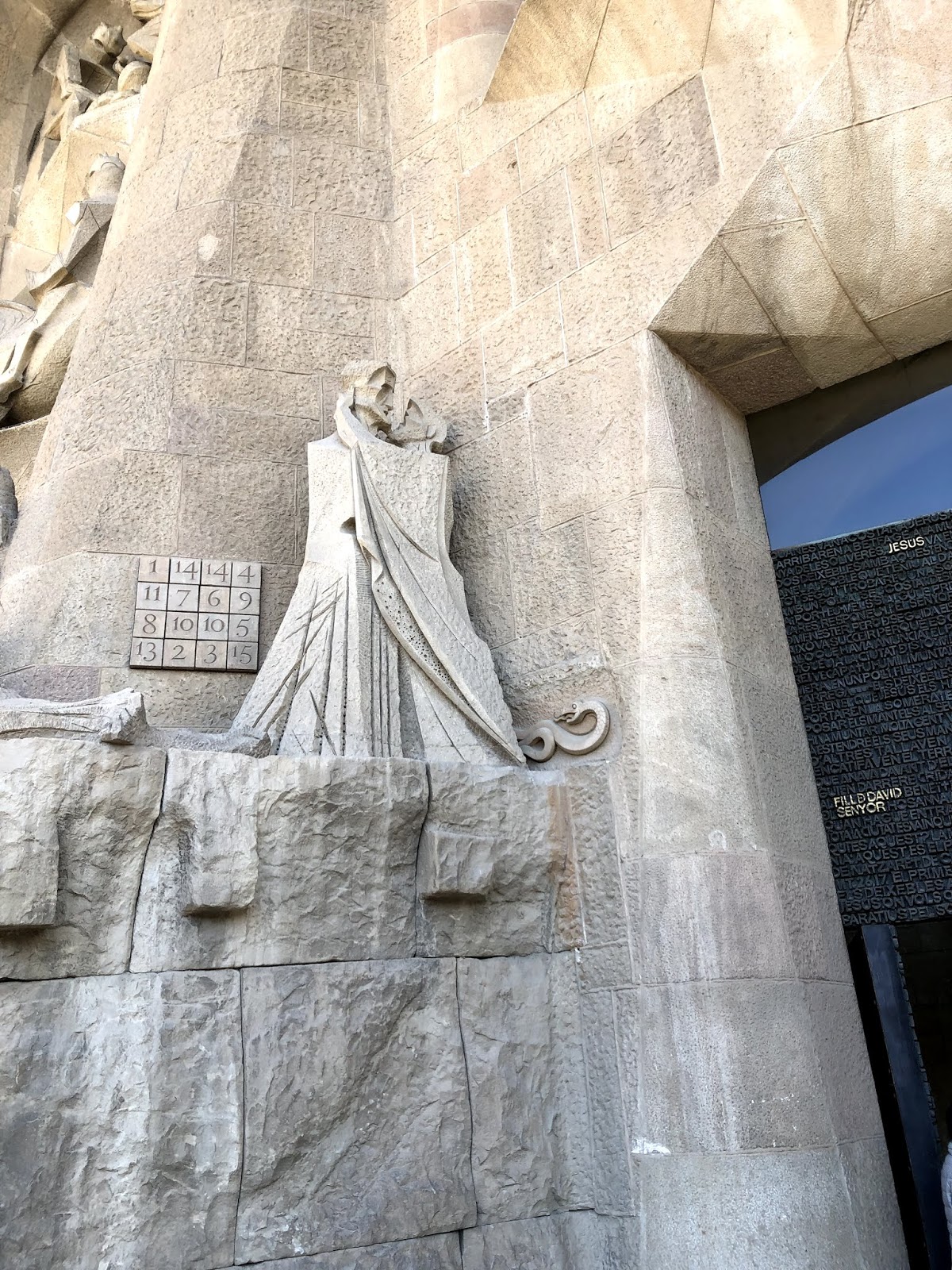
One tortoise is a land tortoise and he is positioned closest to the mountains whilst the other is a sea tortoise positioned closest to the sea. This façade is also covered with statues of Joseph, Mary, Jesus and the 3 Kings amongst others. The passion façade is covered with polygonal sculptures and has a sculpture of Jesus on the cross. There is also a magic square with the magical constant of 33, the age at which Christ died. There are also sculptures of Judas kissing Jesus with a snake representing his betrayal.


The glory façade is still being built and this will become the main entrance. The basilica is expected to be finished in 2026 and I would love to return one day to see it completed. It really is a fascinating building.

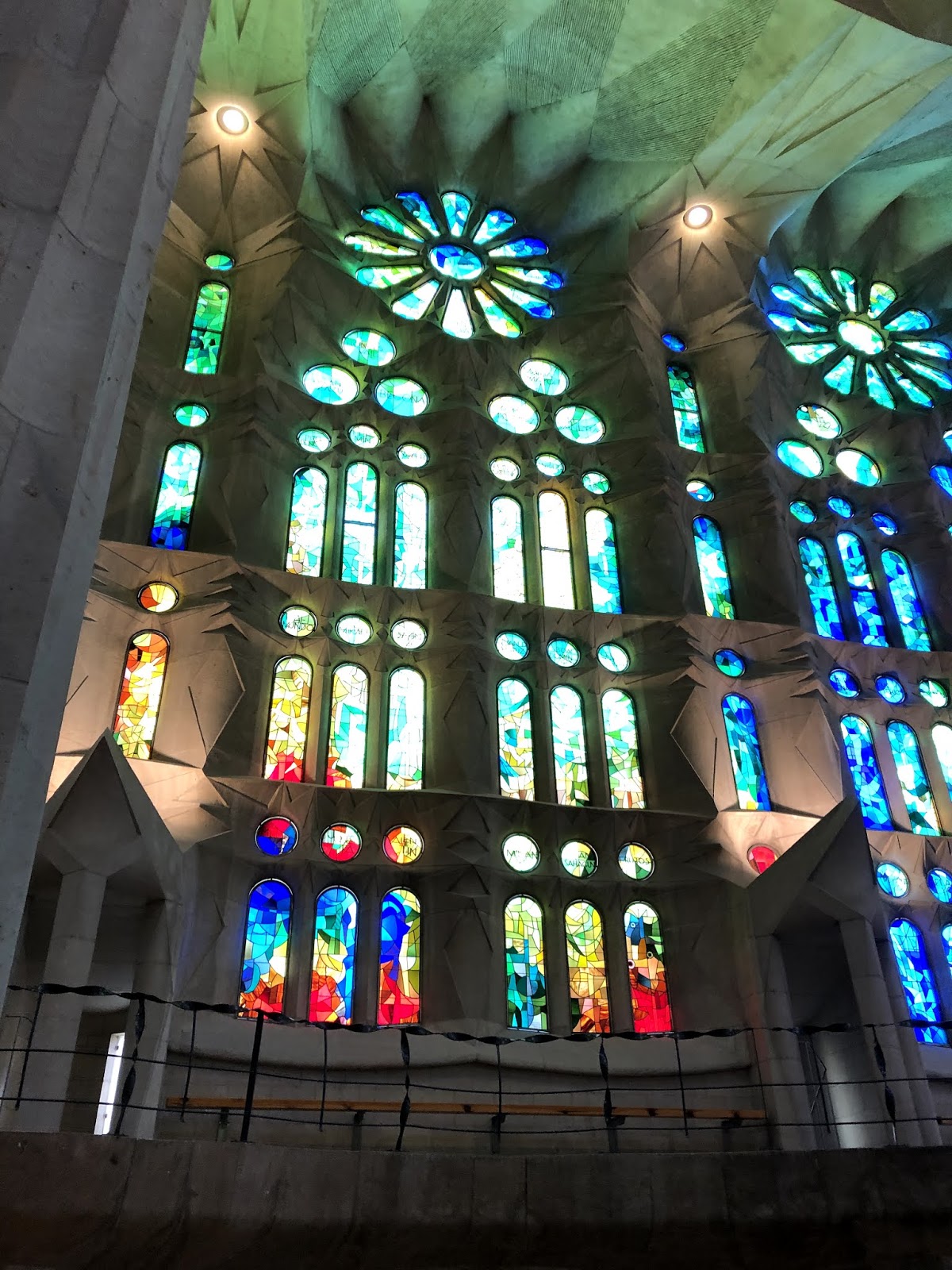


The columns of the interior are made of porphyry, basalt and granite and are designed to represent trees, branching out as they reach the top towards many small windows, which represent the leaves of the trees whilst letting in an extraordinary amount of light. The resultant feeling is one of walking through a vast forest. We were certainly wrong about the interior being dark, as light not only flooded in via the “leaves” but also by the extraordinarily beautiful stained glass windows.


The stained glass windows on the east of church are in beautiful cool shades of blues and greens whilst those on the west side are warm oranges and reds. The interior has no straight lines and everything has been built to imitate nature. We were able to peer down into the crypt where Gaudi is buried and we sat in a pew trying to absorb all that we could see. The exterior of the church is extraordinary. There are three facades, each depicting a phase in the life of Jesus – nativity, passion and glory. The nativity façade is richly decorated with natural scenes and two columns, each with a tortoise at the bottom.


One tortoise is a land tortoise and he is positioned closest to the mountains whilst the other is a sea tortoise positioned closest to the sea. This façade is also covered with statues of Joseph, Mary, Jesus and the 3 Kings amongst others. The passion façade is covered with polygonal sculptures and has a sculpture of Jesus on the cross. There is also a magic square with the magical constant of 33, the age at which Christ died. There are also sculptures of Judas kissing Jesus with a snake representing his betrayal.

The glory façade is still being built and this will become the main entrance. The basilica is expected to be finished in 2026 and I would love to return one day to see it completed. It really is a fascinating building.

We took a walk to the old town of Barcelona, a lovely area of winding streets and laneways flanked by interesting shops and restaurants. Eventually we chanced upon Santa Caterina Market, just in time to pull up a stool at one of the counters for a tapas lunch. The market was built in 1845 and has been refurbished with an undulating roof covered with a brightly coloured mosaic of ceramic pieces representing fruit and vegetables. It was a lovely spot to have lunch, as there weren’t many tourists and the tapas was excellent. We then spent the afternoon exploring some more of the city.


The next day was lovely and sunny which was perfect for our arranged visit to Parc Guell. This park was built in 1900 and was designed as an estate for well-off families. Eusebi Guell was Gaudi’s friend and Guell asked Gaudi to design the park. UNESCO has now declared the park, which covers over 11 hectares, a World Heritage site due to its historical, architectural and artistic uniqueness.

We started our morning with a visit to the Gaudi House Museum. This was where Gaudi lived for 19 years and the museum has been set up to reflect his private life through personal effects and recreations of some of the rooms. The house furniture was designed by Gaudi and is ergonomic and unusual. Light floods through the house through a large picture window overlooking his enormous, beautiful garden.


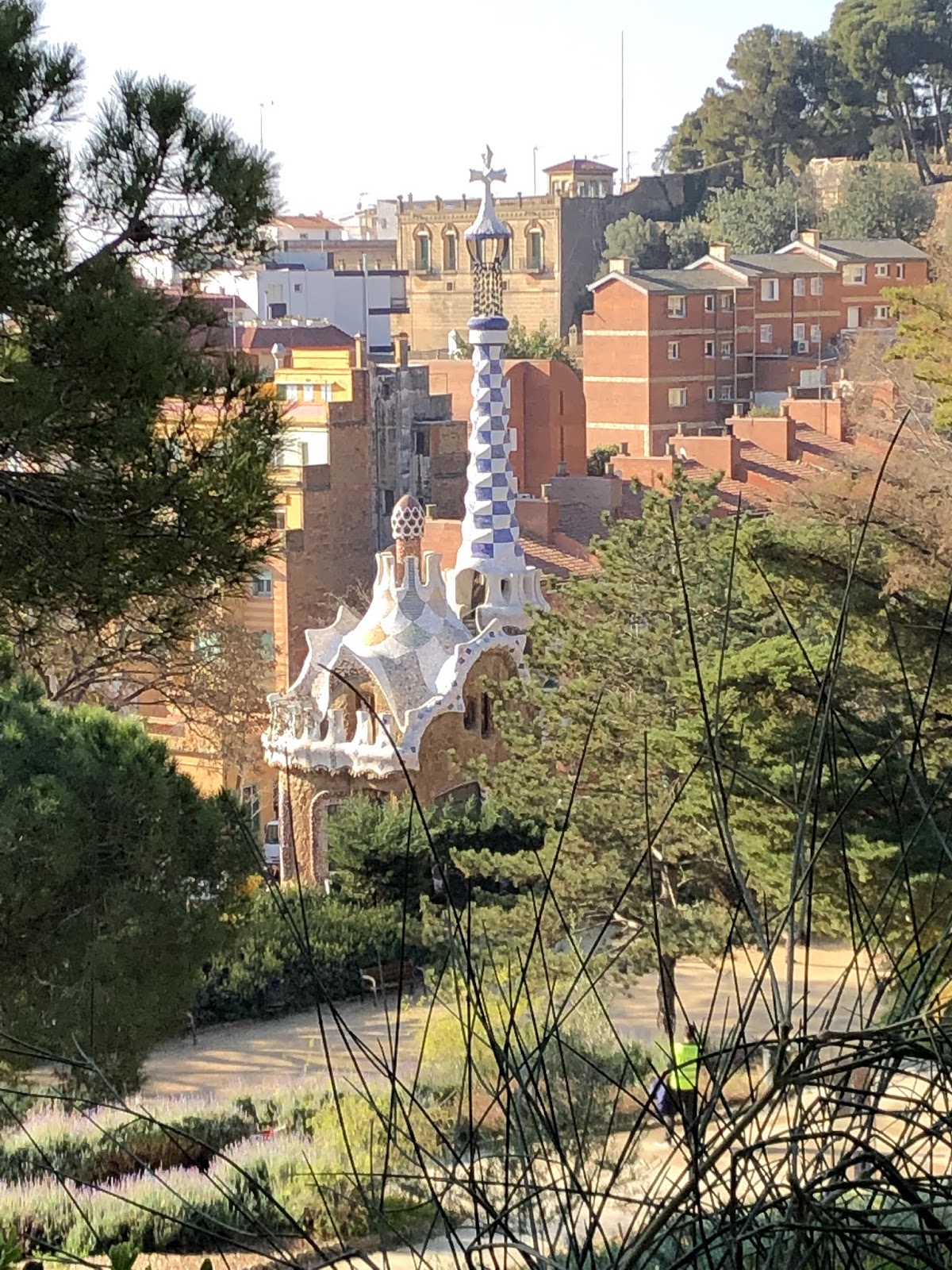
We then took a walk through the rest of the park, starting with the Nature Square. This square is dug into rock and is bounded by an undulating bench covered with tile shard mosaic. Unfortunately for us the square was being restored, so half of the area was closed off, but we were still able to appreciate the beauty of the site and admire the extraordinary view of Barcelona. We also walked through one of my favourite areas – the Hypostyle Room which was made up of 86 striated columns. This area had large spaces and the ceiling was made up of small domes and decorated with shard mosaics. The effect was quite stunning. Our visit finished with a walk down the Dragon Stairway with the famous decorative tile shard mosaic of a dragon or salamander.

We started our morning with a visit to the Gaudi House Museum. This was where Gaudi lived for 19 years and the museum has been set up to reflect his private life through personal effects and recreations of some of the rooms. The house furniture was designed by Gaudi and is ergonomic and unusual. Light floods through the house through a large picture window overlooking his enormous, beautiful garden.


We then took a walk through the rest of the park, starting with the Nature Square. This square is dug into rock and is bounded by an undulating bench covered with tile shard mosaic. Unfortunately for us the square was being restored, so half of the area was closed off, but we were still able to appreciate the beauty of the site and admire the extraordinary view of Barcelona. We also walked through one of my favourite areas – the Hypostyle Room which was made up of 86 striated columns. This area had large spaces and the ceiling was made up of small domes and decorated with shard mosaics. The effect was quite stunning. Our visit finished with a walk down the Dragon Stairway with the famous decorative tile shard mosaic of a dragon or salamander.


Michael and I then caught the train where I had an unpleasant encounter with a pickpocket. Luckily for me, they were unsuccessful however it was a timely reminder to be more careful.
Our next stop was the Museu Nacional D’Art De Catalunya. This gallery sits high on the hill of Montjuic and has magnificent views over Barcelona. The entrance is reached by a grand stone staircase and is flanked by monumental fountains and the gallery itself is stunning. We enjoyed a couple of hours looking at the various artworks on display and there were even 3 El Greco paintings, so I was pretty happy. We finished with a drink on the terrace and enjoyed the sunset and the sound of buskers plying their trade.
Our next stop was the Museu Nacional D’Art De Catalunya. This gallery sits high on the hill of Montjuic and has magnificent views over Barcelona. The entrance is reached by a grand stone staircase and is flanked by monumental fountains and the gallery itself is stunning. We enjoyed a couple of hours looking at the various artworks on display and there were even 3 El Greco paintings, so I was pretty happy. We finished with a drink on the terrace and enjoyed the sunset and the sound of buskers plying their trade.


Michael spotted a bullring in the distance so we decided to have a look to see if it was open for public viewing. We were surprised to discover that it had been converted into a large shopping centre. The bullring was built in 1900 and had a capacity for 15000 spectators. It was closed in 1977 before being re-opened as a shopping centre in 2011. We ascended the escalators to the roof terrace, which is lined with bars and restaurants and decided that it would be a good place for our evening meal. It was a great way to repurpose such a grand building.


Our final bit of fun for the evening was to visit the Magic Fountain of Montjuic. This fountain was designed for the 1929 Universal Exhibition and was restored in 1992 for the Olympic Games.


The fountain bubbles and spouts cascades of water in a sensational show set to music and lit by coloured lights. Hundreds of people lined the street to watch the spectacle and it was fun to see the children enjoying the show.


The fountain bubbles and spouts cascades of water in a sensational show set to music and lit by coloured lights. Hundreds of people lined the street to watch the spectacle and it was fun to see the children enjoying the show.


By far the best place we visited in Barcelona was La Pedrera (the stone quarry), an apartment complex designed by Gaudi. The construction of the building took 6 years and was very controversial due to its unusual structure and the contravention of various council building codes. It was declared a World Heritage Site in 1984 and restored and opened to the public in 1996. We began our tour on the rooftop with its stunning 28 chimneys and stepped roof, which undulates around the building.


The chimneys are covered with fragments of marble and tiles and one is even decorated with glass pieces from champagne bottles. Other chimneys look like mediaeval knights guarding the roof. It was all very colourful and needless to say, the view of Barcelona from this vantage point was marvellous. We then descended to the attic, which used house the communal laundry.


There we saw 270 catenary arches supporting the roof, the effect of which gave the feeling of walking through the inside of an immense whale. The area now houses a display devoted to Gaudi’s life and work with many models, plans, objects, designs, photos and videos. We then ventured down to the Pedrera Apartment, which is decorated, as it would have been in the early 20thcentury. No detail was too small for Gaudi’s attention, with even doorknobs and handles designed by him. It was a beautiful, light filled apartment that would be a joy to live in today.


The chimneys are covered with fragments of marble and tiles and one is even decorated with glass pieces from champagne bottles. Other chimneys look like mediaeval knights guarding the roof. It was all very colourful and needless to say, the view of Barcelona from this vantage point was marvellous. We then descended to the attic, which used house the communal laundry.

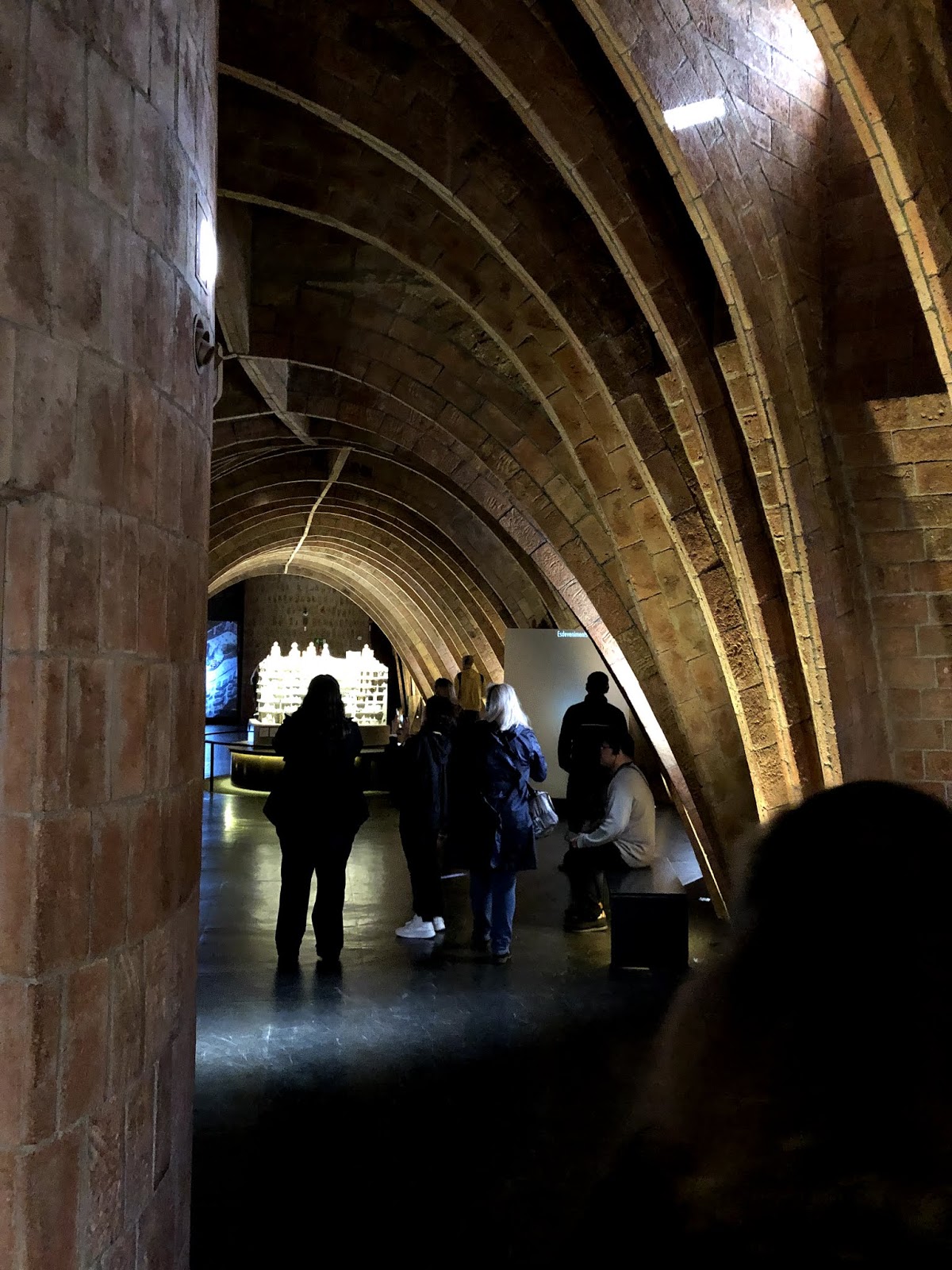
There we saw 270 catenary arches supporting the roof, the effect of which gave the feeling of walking through the inside of an immense whale. The area now houses a display devoted to Gaudi’s life and work with many models, plans, objects, designs, photos and videos. We then ventured down to the Pedrera Apartment, which is decorated, as it would have been in the early 20thcentury. No detail was too small for Gaudi’s attention, with even doorknobs and handles designed by him. It was a beautiful, light filled apartment that would be a joy to live in today.


Barcelona wasn’t all highbrow art and architecture – we did find some time for the frivolous as well, visiting a chocolate museum! The displays consisted of chocolate sculptures of Barcelona buildings like Sagrada Familia as well as cartoon characters and dragons. There were also texts that you could read to discover the history of chocolate. Our tickets to the museum were literally chocolate bars, which you kept to eat at the end of the tour. We moved through the exhibits pretty quickly as a school group of primary students arrived and I think you can imagine how excited they were to be at a chocolate museum!
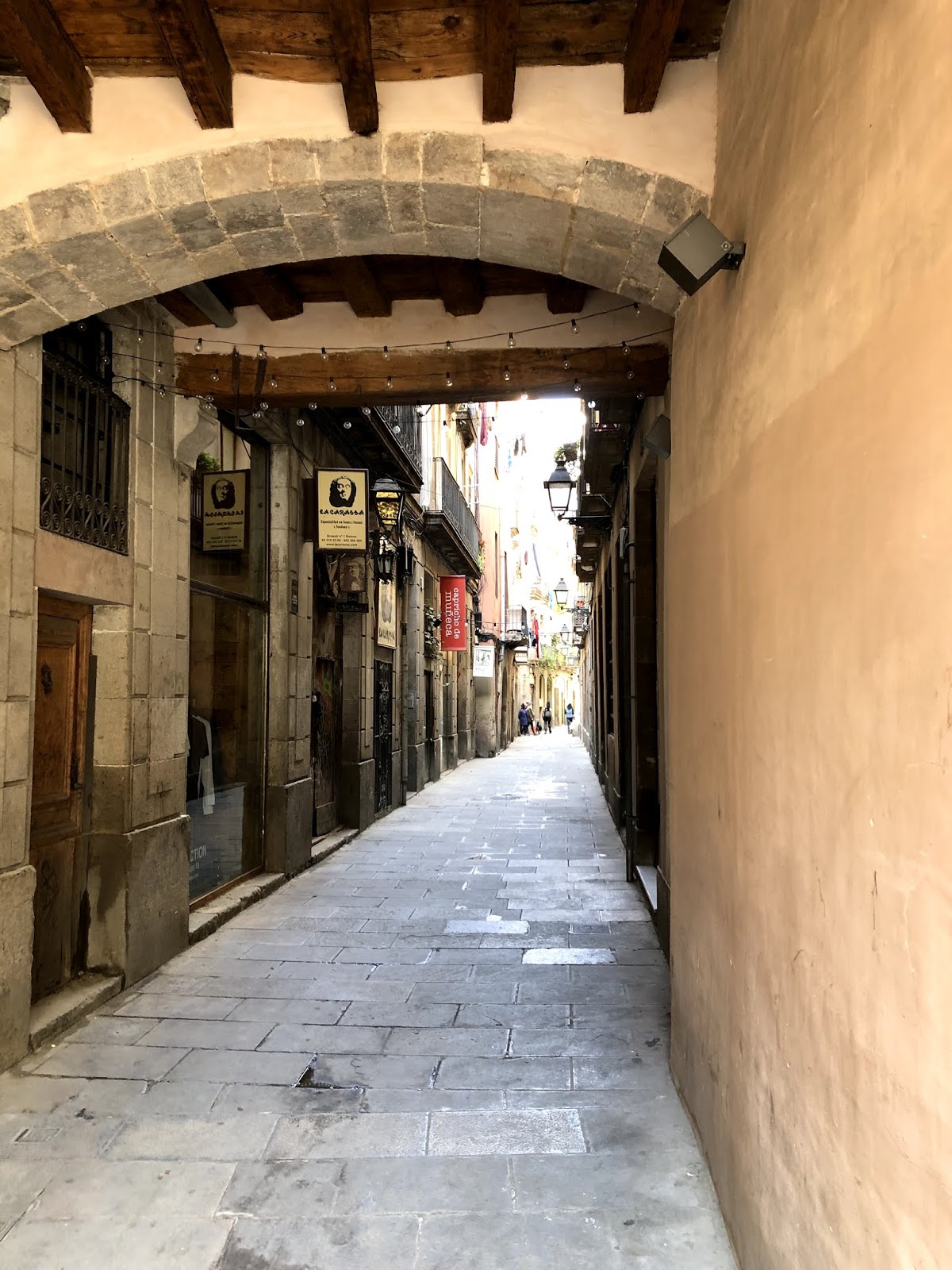

The rest of our time in Barcelona was spent exploring the different areas like the waterfront, La Rambla, the Mercado de La Boqueria and pretty much everything in between. The city is ideal for walking and we walked in excess of 100 kilometres over the 5 days of our visit. I loved the food, the wine but most of all I loved the architecture – not just Gaudi (although his works were endlessly fascinating), but the great variety of styles from Gothic to modernist. Barcelona is truly a beautiful city.
Lots of photos below