Michael and I caught the train from Dublin
to Rosslare, which was a very comfortable journey. Rosslare is very much a one-horse town with
the hotel where we stayed, a couple of shops and the dock and not much
else. The views over the water are
beautiful and we had a nice relaxing overnight stay. We ate dinner at the hotel and Michael
ordered the fish, asking for vegetables but no chips. His meal came with roast potatoes, mashed
potatoes and potatoes au gratin. You
have to love Irish cuisine!

The following morning we decided to fill in
time until sailing with a spot of geocaching.
We found the first one without any problem. Michael then suggested looking for another,
which led us on a remarkable journey up and over stiles, through paddocks and
fields, all along the cliff edge. We
came to where the cache was supposed to be hidden which necessitated Michael
leaning precariously over the cliff edge.
I remember thinking, if he falls, I am still getting on that ship to
France! Needless to say, he recovered
the cache without incident with neither of us blown over the edge.
We sailed on the overnight ferry Oscar
Wilde to Cherbourg. I was amazed at the lack of security checks
undertaken. Our luggage was not searched
nor x-rayed and there wasn’t even a sniffer dog on duty. It was all very different to plane travel. The
crossing was very comfortable and our cabin was spacious. The only glitch in the trip was the vomiting
children and I found myself grateful that I wasn’t one of the parents responsible
for them. It didn’t worry us too much as
we just kept swapping bars to find somewhere more comfortable to sit.


The ferry docked in Cherbourg the following
morning and we found our accommodation easily.
It was a very modern apartment with everything we needed and after
dropping off our luggage, we set about exploring the town. We had docked on a Monday so most shops were
closed however we managed to find a café from which to watch the world go by.


Michael hired a car the next morning and we
set out to visit the D Day landing sites.
We stopped at the village of Sainte Mere-Eglise, which is famous for the
church with parachute memorial. The town
church has a dummy hanging from a parachute suspended from the spire. This represents an incident, which happened
when paratrooper John Steele took part in the D Day landings only to land on
the church where his parachute got caught.
He hung there for two hours, pretending to be dead, before the Germans
took him prisoner. Steele later escaped
from the Germans and rejoined his division.


The 70th anniversary of the D
Day landings had been commemorated only a few days before our arrival, so the
town was still decked out with bunting and the streets filled with the flags of
the allies. Glen Miller music played
loudly from one of the shops and another played the Andrews Sisters songs, so
the atmosphere was quite festive. There
were still many tourists, many of them American, who were in town for the
re-enactments, services and commemorations.
French guides dressed as American GIs took tour groups around in WW2
army jeeps.

Over the next couple of days, we visited
the various beaches of the Normandy landings namely, Utah, Omaha, Gold, Juno
and Sword Beach. We saw the many
memorials and each beach had it’s own way of marking the occasion. The coastline is beautiful and the beaches
stretch for miles in each direction and it is hard to imagine the horrors that
took place there.
The Normandy American Cemetery and Memorial
is a very beautiful but sombre place to visit.
There are 9,387 American military personnel buried there and the sight
of all those white crosses is hard to forget.


We also visited the La Cambe German war cemetery and were overwhelmed by
the sight of over 21,000 black crosses commemorating the German dead.


To lighten the mood after an intense few
days, we visited the lovely city of Bayeux.
The cathedral there is absolutely beautiful and was consecrated in
1077. This was originally where the
famous Bayeux Tapestry was displayed. The
tapestry is now stored in its own museum so naturally we went along to have a
look. Michael asked the ticket seller
why the Australian flag was flying out the front and the young man replied that
the Australian Prime Minister had been to visit the museum a couple of days
prior. Michael responded “how terrible
for you”. The young man looked confused
and said he didn’t know the man, to which, Michael responded, “then you are
very lucky”. We left the poor man
looking very perplexed. The tapestry (it
is really an embroidery) depicts events leading up the Norman conquest of
England. It really is a sight to behold
and it is fascinating to listen to the commentary describing the events
depicted on the tapestry.


Show
Me The Monet
Michael surprised me with a trip to Claude
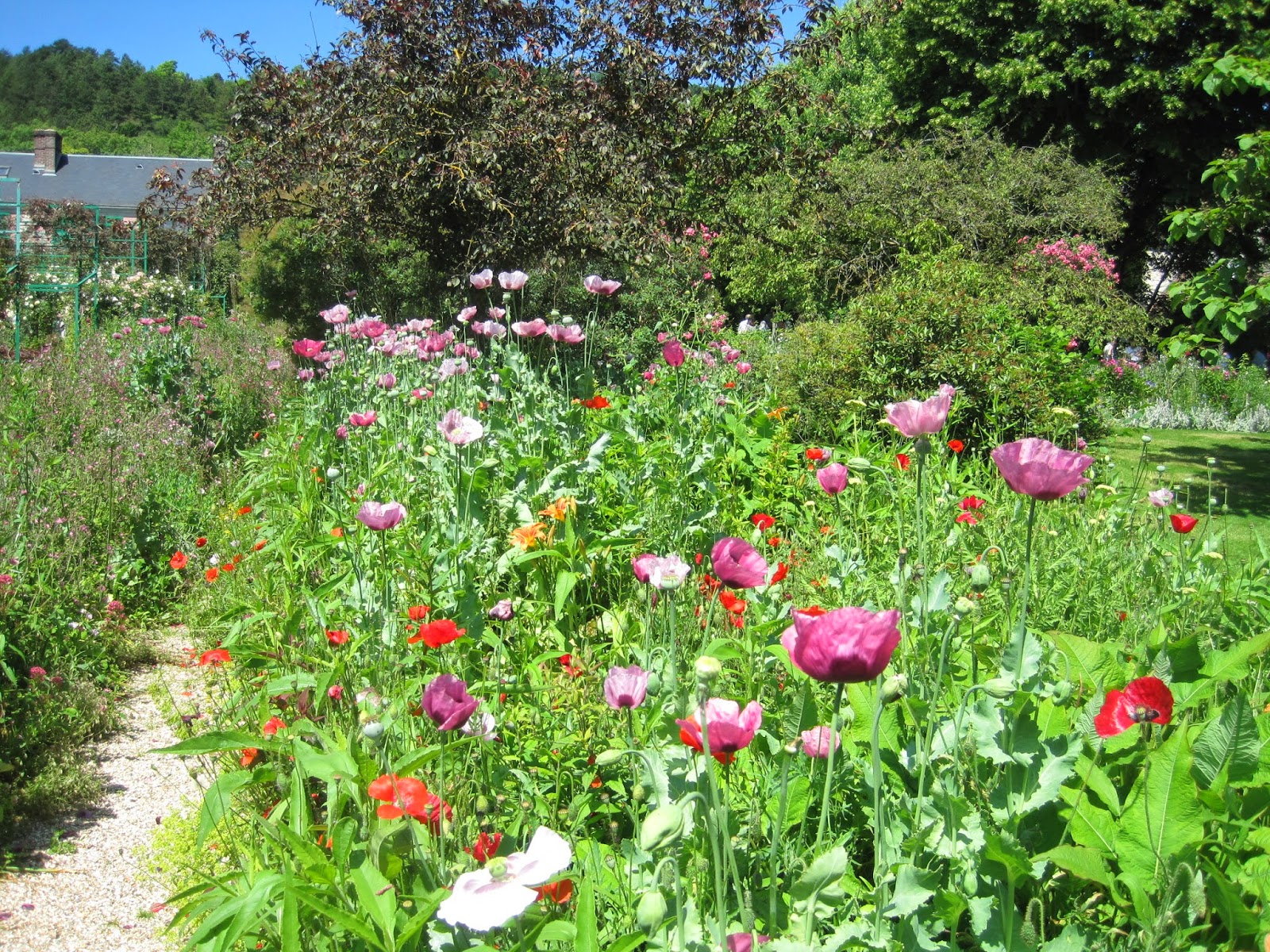
Monet’s garden in Giverny. I can’t begin
to describe how absolutely beautiful it was.
The weather was perfect and both Michael and I were in short sleeves for
the first time in 9 months. The tour
starts in Monet’s house, which is beautifully and colourfully decorated
throughout. The garden is visible from
all of the windows so you can imagine what it was like to live there. The garden itself is amazing and you feel as
though you have stepped out of real life and into one of his paintings. There are roses everywhere and just about
every other flower that you can name.
The highlight though is the water garden with its Japanese bridge, which
is so familiar from his paintings. It is
a place of such beauty and serenity.
What a wonderful legacy to leave the world – all of his fabulous artwork
and a stunning garden. One funny thing
though – it doesn’t matter where you go in the world, you can’t get away from
politicians. Simon Crean was wandering
around the gardens with his family.


Dulce
Et Decorum Est Pro Patria Mori
Michael and I stayed in a lovely apartment
in the beautiful, tiny village of Authuille, which is situated just outside of
Albert in the heart of the Somme. The
apartment itself was the converted stables of a farm- house and had been
exquisitely decorated. Seriously, it
looked like something out of French Vogue.
The owners lived in the farm- house, which they had extensively
renovated over the years. They were a
lovely couple and they couldn’t have been more hospitable or welcoming. Fresh flowers, homemade jam and homemade
meringues were left for us. They even
invited us in for drinks one evening with their family and it was relaxing drinking
pastis with them and hearing about French life.


The reason for our visit to the Somme was
to explore the battlefields of World War 1.
The apartment was situated next door to the Authuille Military
Cemetery. When I say next door, I mean
you walked out of our gate, into the next gate, which led to the cemetery.
There are over 450 graves there. We were
also within walking distance of three other cemeteries - the Thiepval Memorial,
which bears the names of 72,000 men who died in the Somme and have no known
grave,
 |
| Thiepval Memorial |
Blighty Valley Cemetery which contains 1,027 burials and the Lonsdale
Cemetery which contains 1,542 burials.
This was just the tip of the iceberg.

The next eight days we drove all over the
Somme, stopping at dozens of cemeteries, memorials and the occasional
museum. Some of the cemeteries were
relatively small, containing only a few hundred graves. Other cemeteries were larger, holding a few
thousand graves and some bigger still, with 20,000 or more buried. It is hard to describe the sight of the rows
upon rows of graves. The countryside is
beautiful farmland and yet in the middle you come across yet another
cemetery. Some cemeteries are along the
main roads with others accessed along winding tracks. Every single one of them is impeccably
maintained – lawns mowed and beautiful flowers, mostly roses, grow between the
graves. There is not one single piece of
litter and not one single bit of vandalism or graffiti in evidence. They are such peaceful places and it is
moving walking among the headstones and reading the ages of the young men, some
as young as 17 years. More moving still
are the mementos left by the relatives of the fallen, such as the occasional
photo, a wooden cross or a memorial wreath.

 |
| Bullecourt |
I won’t mention every cemetery we visited
however there are couple which were very special. Villers-Bretonneux Memorial commemorates
10,762 fallen Australian servicemen.


This memorial’s tower can be seen from quite a distance away and it is a
very impressive monument to the fallen.
Ironically, it was finished and opened in 1938, just in time for it to
be damaged in the next war. The memorial
has been restored however the shrapnel scars have been left as testament to
World War 2. The Villers-Bretonneaux
museum is housed on the second floor of the village school. This museum pays tribute to the men who
fought and it is humbling to see just how highly regarded these men were by the
local French and how grateful they were.
Australian flags are a common sight around this area.
 |
| Beaumont - Hamel Newfoundland Memorial |
The Beaumont-Hamel Newfoundland Memorial is
dedicated to the Newfoundland forces members who were killed at the battle of
the Somme. It was a particularly tragic
event as it was the regiment’s first major engagement and the regiment was all
but wiped out within 30 minutes. The
memorial itself is giant caribou atop a hill.
The surrounding area has been kept as near to how the terrain looked at
the time of the battle, with the remains of trenches surrounding the area.
 |
| Welsh Memorial |
 |
| Ulster Memorial |